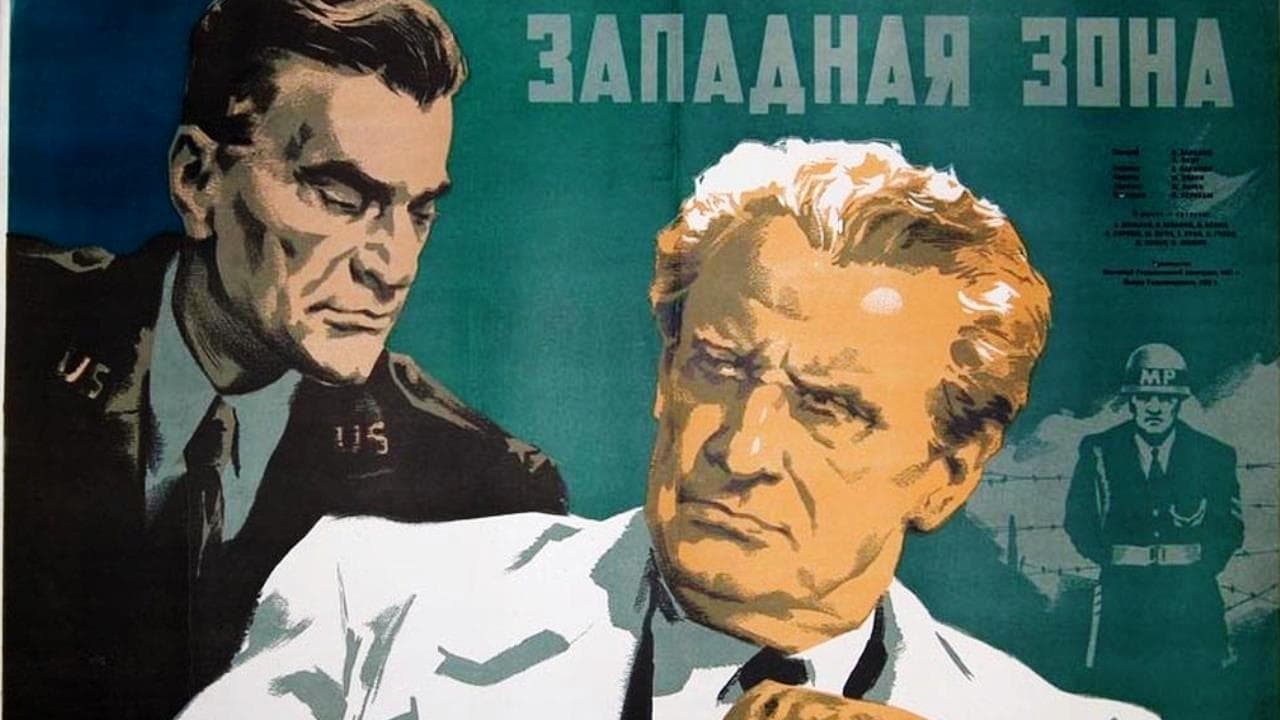

Nyugati övezet
Prof. Laurent Akush from the Institute of Geophysics is working on a device that can be used to locate coal underground. For successful work he needs a tube XCX13, it is available in the West, but foreign firms sabotage the supply of the device. In his institute there is an enemy engaged in sabotage, but the professor does not believe in enemies. He believes that this is propaganda, science is above ideology, and that "scientists are made of a different dough." Laurent Akush receives an invitation to the international geological congress in Berlin, there he hopes to meet an old American friend, the scientist McLane. He takes with him his assistant Ferenc Ervish and a young Stakhanovite worker, Ishvan Kadosh. The professor does not yet know that in Berlin, Colonel Thompson of American intelligence is preparing a trap for him.
Insights
Plot Summary
Set during the final days of World War II, the film depicts the struggles of Hungarian soldiers and civilians caught in the chaos as the Western Front collapses. It explores themes of loyalty, survival, and the moral ambiguities faced by individuals in a rapidly changing and dangerous world. The narrative follows a group of soldiers as they attempt to navigate the collapsing Hungarian society amidst advancing Allied forces and internal conflicts.
Critical Reception
The film is considered an early significant work in Hungarian cinema, exploring the harrowing realities of war and its impact on the human psyche. While perhaps less known internationally than Jancsó's later works, it was an important contribution to post-war Hungarian filmmaking, offering a somber reflection on historical events.
What Reviewers Say
- A stark portrayal of the human cost of war.
- Explores the moral compromises made in desperate situations.
- Reflects the historical turmoil of post-war Hungary.
Google audience: Audience reception information is not readily available for this older Hungarian film.
Fun Fact
Miklós Jancsó, the director, later became renowned for his distinctive long-take style, which was already beginning to emerge in his earlier works like 'Nyugati övezet'.
AI-generated overview · Verify ratings on official sources